
Your Phone Is Filthy – Your Kiosk Might Be Worse – The New Science of Touchscreen Hygiene
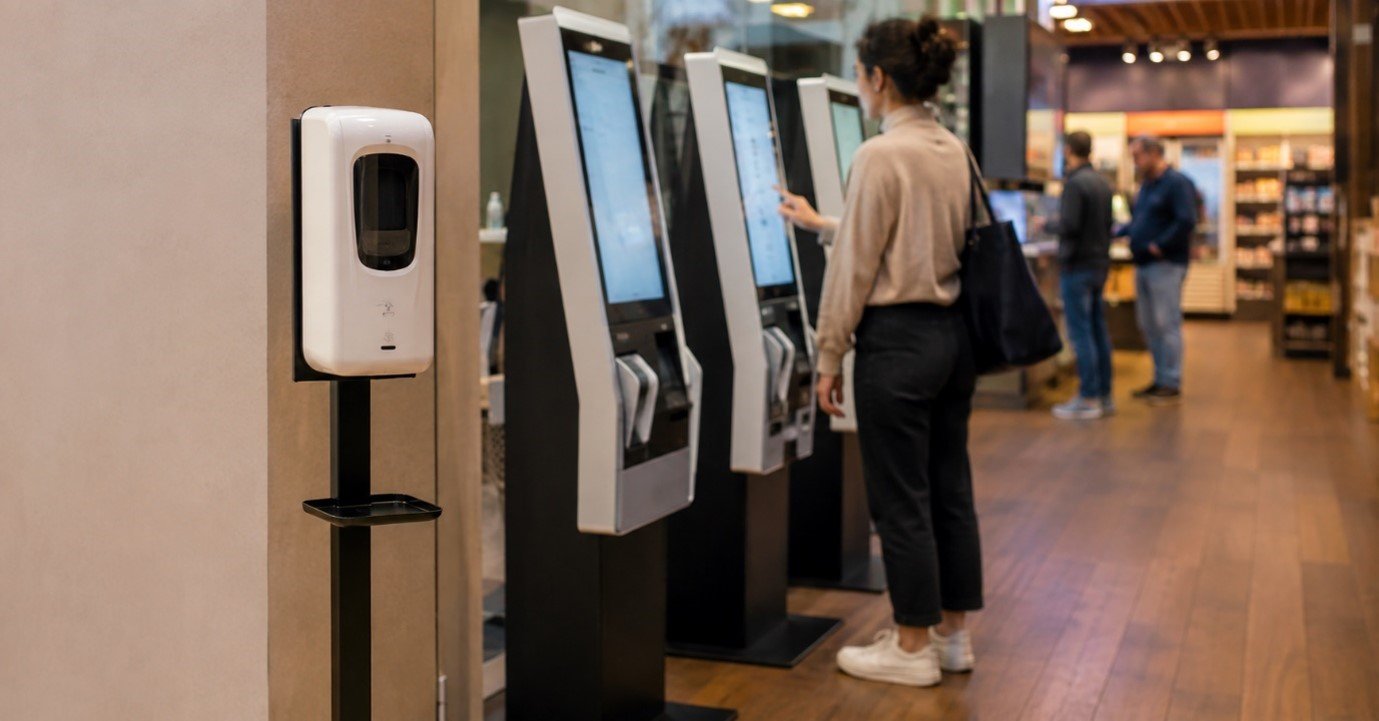
Think about the last time you cleaned your phone. Now think about the last time anyone cleaned the self-checkout screen you just tapped, or the ordering kiosk at lunch. Researchers have swabbed public touchscreens for years, and the results keep telling the same story: shared screens carry far more bacteria than most people expect.
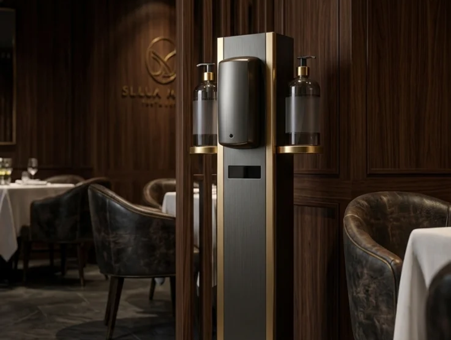
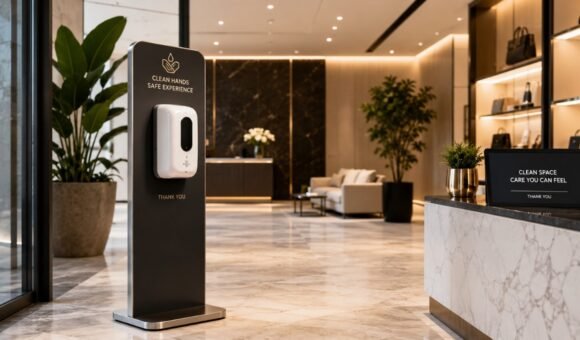
This is exactly why a well-placed sanitizer stand near high-touch surfaces has become part of everyday hygiene planning for offices, restaurants, and retail spaces. More businesses are now looking for a reliable hand sanitizer stand for public spaces to close that gap.
What the Research Actually Found
Touchscreens are convenient because they are fast and hands-on. That same quality is what makes them collect germs so quickly. A few findings stand out across the studies:
| Location tested | What researchers found |
| Fast food self-order kiosks | Bacteria linked to gut and respiratory illness on nearly every screen swabbed. |
| Airport check-in screens | Bacterial counts reaching hundreds of thousands of colony-forming units on a single screen. |
| Hospitals and transit kiosks | Similar bacterial levels, often tied to how rarely the screens were wiped down between users. |
Touchscreens are touched by hundreds daily but cleaned far less often. A sanitizing floor stand earns its place here, putting sanitizer within arm’s reach of the surface people are about to touch.
Why Phones Aren’t Off the Hook Either
It is worth saying clearly: your phone is not innocent. Personal devices go everywhere, including the bathroom, and studies on phone hygiene have found bacteria levels that rival or exceed public surfaces.
“The difference isn’t cleanliness. It’s exposure. A phone mostly touches one person’s hands. A public kiosk touches everyone who walks by.”
That is the real takeaway from touchscreen research. It is not that phones are clean and kiosks are dirty. It is that any surface touched by many hands, without a habit of sanitizing in between, becomes a shared risk. A few everyday examples make the point:
- Elevator buttons in office lobbies
- Shopping cart handles at grocery stores
- Self-checkout and self-order screens
- Shared kiosks at airports, clinics, and transit stations
Where Hand Hygiene Fits Into the Picture
Wiping down a screen matters, but it only solves half the problem. Hands touch the screen, then touch a face, a snack, or a doorknob a few seconds later.
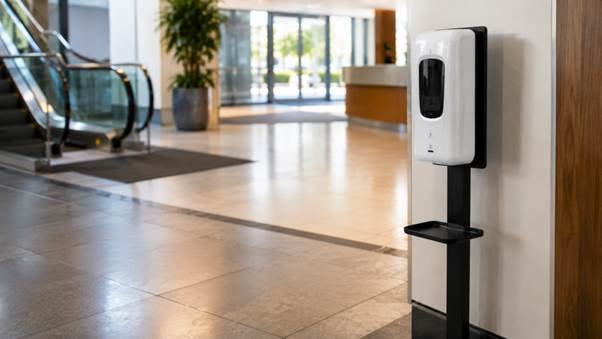
Breaking that chain is where hand hygiene habits make the biggest difference. It is why placing a sanitizer stand at the point of contact works so well. When sanitizer sits right next to the kiosk or checkout line, people can clean their hands before or after using the screen without going out of their way.
This is a habit businesses can build into daily operations without much friction:
- A touch-free sanitizer dispenser near a self-order kiosk gives customers a quick way to clean up before or after ordering.
- No policy change or extra staff time is required.
- The sanitizer just needs to be visible and within reach at the moment people need it most.
Practical Habits for Businesses Using Public Kiosks
A few small routines go a long way in cutting down what researchers keep finding on shared screens:
- Wipe down high-touch kiosks and screens on a regular schedule, not just when they look dirty.
- Place a sanitizer stand near every self-service station, not just the main entrance.
- Encourage staff to sanitize hands between customer interactions at counters and registers.
- Choose a sanitizing floor stand that is stable, easy to refill, and visible enough that people actually notice it.
- Pair screen cleaning with hand sanitizing, since one without the other only covers part of the problem.
None of this requires a major overhaul. It is a matter of putting sanitizer where people already are, right next to the surfaces that see the most contact throughout the day.
A Calm Approach to a Common Problem
A little awareness goes a long way. Here is how businesses can handle touchscreen hygiene without overreacting or overselling it.
Convenience Isn’t the Enemy
The goal isn’t to make anyone afraid of touchscreens. People will keep using self-checkout lanes, ordering kiosks, and shared devices because they are genuinely convenient. A sanitizer stand placed thoughtfully near a kiosk supports better habits quietly, without slowing anyone down or making a big production out of hygiene.
What Businesses Notice
Businesses that get this right tend to treat it as part of good customer experience, not a compliance checkbox. Clean, well-kept spaces feel more trustworthy at first glance, and visitors notice when a business has clearly thought about the details.
Small Habits Say a Lot
A sanitizer stand by the door often communicates more than a sign ever could. It shows visitors that hygiene has been considered, not just mentioned, and that quiet signal tends to stick with people longer than they might expect.
Final Thoughts
Public touchscreens will keep playing a role in how people shop, order food, and check in for travel. What research keeps showing is that these shared surfaces need the same attention as any other high-touch point in a building. Placing sanitizer where people already pause, right at the kiosk or checkout line, is a simple step that supports better habits without disrupting daily routines.
A dependable hand sanitizer stand for public spaces makes that habit easy to keep. The HandStand Shop designs stands built for exactly these moments, helping busy spaces stay a little cleaner, one touchpoint at a time.
Frequently Asked Questions
1. Are touchscreens really dirtier than phones?
Public kiosks are touched by far more people than a personal phone, so they tend to carry a wider range of bacteria, even if individual phones test high too.
2. How often should public kiosks be cleaned?
High-traffic screens should be wiped down several times a day, ideally on a set schedule rather than only when visible dirt appears.
3. Does hand sanitizer help if the kiosk itself isn’t cleaned?
Yes. Sanitizing hands before and after touching a shared screen reduces what gets picked up or passed along, even between cleanings.
4. Where should a sanitizer stand be placed near a kiosk?
Right beside the screen or checkout line works best, since people are more likely to use sanitizer when it is within easy reach.
5. Are touch-free dispensers better than manual pump bottles?
Touch-free dispensers reduce extra contact with a shared surface, which is useful in spots that already see heavy foot traffic.
Ready to Add a Sanitizer Stand to Your Space?
Keep your kiosks and checkout counters cleaner betw
Add a review
Your email address will not be published. Required fields are marked *