
Smart Dispensers, Sensors & Data: Is Hygiene About to Get Its Own Dashboard?
Walk into most restrooms today, and you will still find the same setup that has been around for decades: a dispenser, a bottle, and a hope that someone remembers to refill it before it runs dry. Staff rarely know a unit is empty until a visitor points it out, and by then, the moment to fix it quietly has already passed.
That is starting to change. A new wave of smart soap dispensers now track usage, flag empty units, and quietly feeds that information into a dashboard someone can actually check before problems build up. It raises a fair question worth sitting with: is hygiene finally getting the kind of visibility that inventory and sales numbers have had for years, and does that visibility actually help anyone on the ground?
The Quiet Problem With Traditional Dispensers
Most facility teams do not find out a dispenser is empty until someone complains, or worse, until a health inspector does. Restocking runs on habit and guesswork rather than actual usage patterns, which means high-traffic restrooms often run dry at the exact moments they matter most.
This is not a small operational detail. Foam and gel dispensers can sit empty for hours in a busy building, and nobody upstream has any way of knowing until a person walks up to a unit and finds nothing there. That blind spot is the entire reason connected dispensers exist in the first place.
So What’s Actually Inside One of These Things?
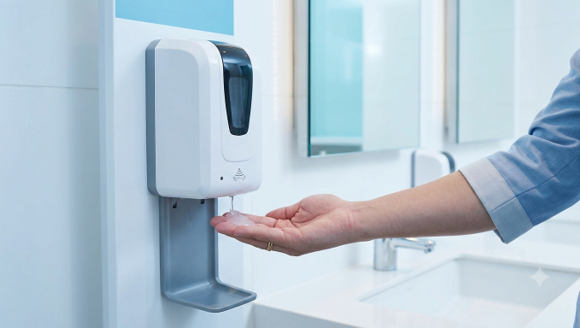
A sensor-based dispensers setup is simpler than it sounds. A basic sensor tracks how often the unit is triggered, another checks remaining product level, and a small transmitter sends that data somewhere useful.
| Component | What It Actually Does |
| Usage sensor | Counts each dispense, building a usage pattern over time |
| Level sensor | Flags low product before the unit runs completely dry |
| Connectivity module | Sends readings to a dashboard or app in real time |
| Battery or power source | Keeps the whole unit running without manual resets |
None of this requires a facility to rebuild its restrooms from scratch. Most connected hygiene dispensers are designed to swap in where a standard unit used to sit, which is part of why adoption has picked up faster than expected.
From Single Device to Full Dashboard
One smart sanitizer dispensers gives you a data point. A building full of them gives you a pattern, and that pattern is where things get genuinely useful. Facility managers can see which restrooms run low first, which floors see the heaviest traffic, and which units are quietly underused and possibly due for relocation.
This is the core promise behind modern hygiene monitoring systems: turning a maintenance chore into something closer to a live view of building activity across an entire building rather than one unit at a time.
Managers stop reacting to complaints and start noticing patterns before they turn into problems.
Instead of a janitorial checklist based on guesswork, teams get hygiene usage tracking that reflects what is actually happening, floor by floor, hour by hour.
The IoT Layer Nobody Talks About
Behind the dashboard sits a layer of infrastructure most people never think about, and it is where the real capability comes from. Dispensers, sensors, and gateways all talk to each other over the same kind of wireless networks used for smart thermostats or warehouse tracking.
Good IoT hygiene management does not need constant human input once it is set up correctly. It just runs, quietly logging data in the background while staff go about their normal work.
None of this depends on any single vendor or proprietary format, which is part of why adoption has spread so quickly across different building types.
That groundwork is what makes smart hygiene technology genuinely useful in restrooms specifically, rather than a generic sensor bolted onto a wall. The system starts to understand its environment instead of treating every space the same way.
Restrooms Are Becoming Smarter Spaces Too
Dispensers are only one part of a larger shift. Occupancy sensors, air quality monitors, and traffic counters are all starting to show up in the same restrooms, feeding into the same dashboards. Together, they form the beginning of genuine smart restroom technology, where cleaning schedules respond to real usage instead of a fixed clock on the wall.
That shift matters more than it sounds. A restroom used by two hundred people in the morning needs different attention than one used by twenty, and until recently, there was no easy way to know the difference in real time.
Automated Doesn’t Mean Impersonal
It is worth addressing directly: none of this replaces a cleaning team, and none of it should. Automated hygiene monitoring exists to tell people where attention is needed, not to remove people from the process. A sensor cannot refill a dispenser or wipe down a counter. It can only point a human in the right direction faster than a walkthrough would.
Facilities that get the most value out of a system like this tend to treat the data as a helpful nudge rather than a replacement for judgment. The technology handles the noticing. People still handle the doing.
Deciding What’s Worth Installing
Not every building needs a fully connected system on day one. A reasonable way to approach it:
- Start with the highest traffic restrooms, where empty dispensers cause the most disruption
- Choose units that report both usage and product level, not just one or the other
- Confirm the dashboard is simple enough that staff will actually check it
- Expand gradually once the first rollout shows clear, useful data
Conclusion
Hygiene has quietly lagged behind almost every other part of facility management when it comes to real data, and that gap is finally closing. Dashboards, sensors, and connected systems are turning a task built on guesswork into something measurable, which matters most once a building gets busy enough for guesswork to fail.
The HandStand Shop sees this as a natural next step for any space that already takes hygiene seriously. Good equipment paired with thoughtful technology tends to outperform either one alone, and smart soap dispensers are a clear example of that pairing at work. The goal stays simple: fewer surprises, fewer empty dispensers, and a clearer picture of what is happening day to day.
FAQs
1. Are smart soap dispensers difficult to install in existing restrooms?
Most are designed to fit standard mounting setups, so buildings can usually swap them in without major renovation or rewiring work.
2. Do connected dispensers require Wi-Fi to function?
Many use low-power wireless networks separate from a building’s main Wi-Fi, which keeps installation simple and avoids overloading existing internet infrastructure.
3. Can this technology track individual restroom visitors?
No. These systems track dispenser activity and product levels, not people, so visitor identity is never part of the collected data.
4. How much does smart hygiene technology typically cost?
Costs vary widely based on building size and sensor count, though many facilities start with a small pilot area before expanding further.
5. Does automated monitoring reduce cleaning staff workload?
It shifts effort rather than reducing it, helping teams prioritize restocking and cleaning where usage data shows it is actually needed most.
Curious What Smart Monitoring Could Look Like in Your Space?
If empty dispensers and guesswork restocking sound familiar, a connected setup can fix that, starting with your busiest restrooms. Explore dispensers built to support sensors and usage tracking, then expand once the dashboard shows where it matters most.
Add a review
Your email address will not be published. Required fields are marked *