
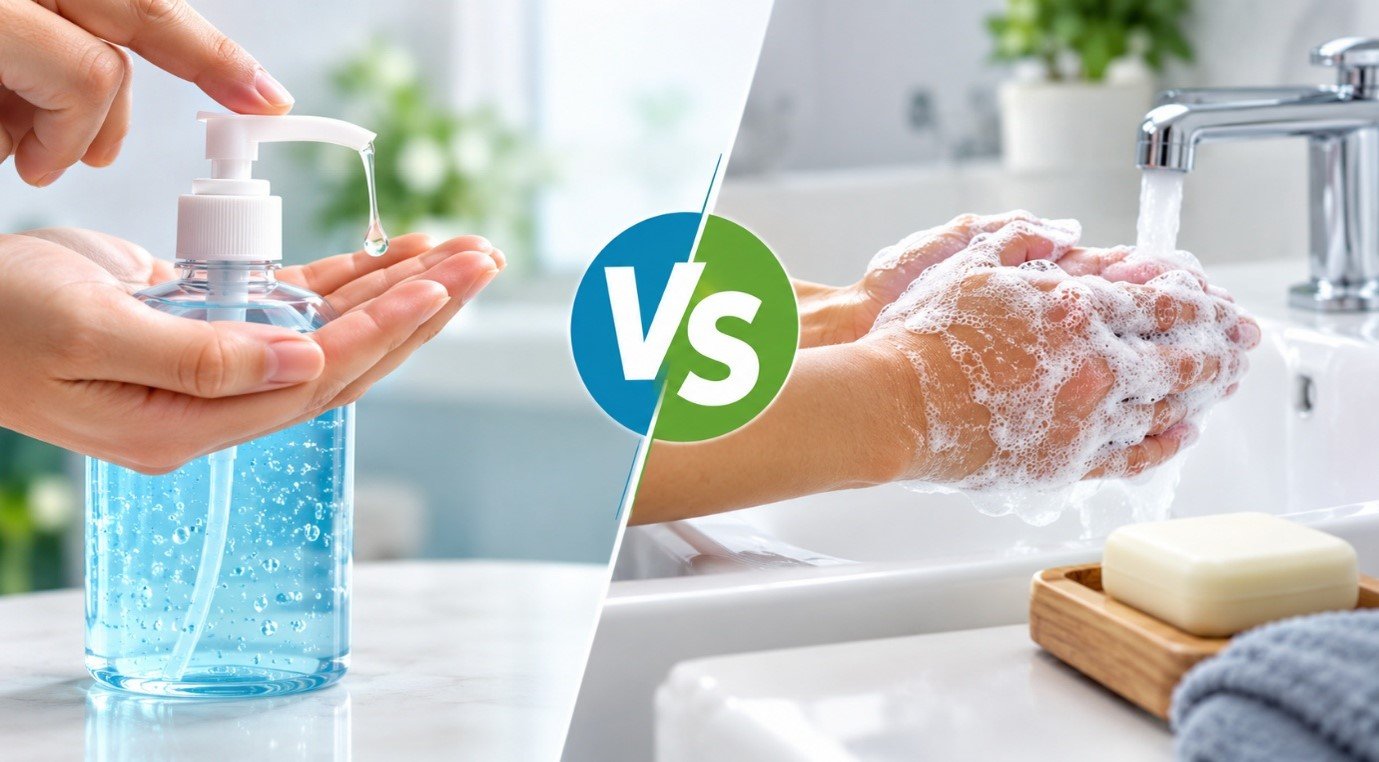
Sanitizer vs. Soap: The Hygiene Showdown Everyone Thinks They Understand
Good hand hygiene helps reduce the spread of germs, but knowing when to use soap and water versus hand sanitizer can be confusing.
Soap and water are generally the preferred choice, especially when hands are visibly dirty or greasy. When a sink is unavailable, an alcohol-based hand sanitizer containing at least 60% alcohol is a practical alternative.
In this guide, we compare soap and hand sanitizer, explain when each option is appropriate, clear up common misconceptions, and share practical hand hygiene tips for offices, shops, cafes, and other public spaces.
Do Hand Sanitizer and Soap Actually Work the Same Way?
They both serve to lower the number of germs that are on your hands, yet they differ in their approach. Soap and water help to remove dirt, oils, and germs from your skin surface. Alcohol-based hand sanitizers eliminate germs from your skin surface without anything to be washed off.
That difference is why the soap vs hand sanitizer comparison is not about one being “good” and the other “bad.” Each has strengths.
| Factor | Soap and water | Hand sanitizer |
| How it works | Lifts and rinses away dirt and germs | Inactivates many germs on the skin |
| Visible dirt and grease | Removes it | Does not remove it well |
| Some stubborn germs (such as norovirus) | More reliable | Less reliable |
| Speed and convenience | Needs a sink and a few moments | Fast, works anywhere |
| Needs running water | Yes | No |
| Best for | Dirty hands, restrooms, before eating | Quick cleaning between washes, shared surfaces, on the go |
Which Wins for Everyday Hygiene: Hand Sanitizer or Soap?
For most people, the honest answer is that hand sanitizer vs. soap for everyday hygiene comes down to access and circumstance. When a sink is available and your hands are visibly dirty, soap and water is the stronger choice. When you are between tasks, out of reach of a sink, or moving through shared spaces, sanitizer fills the gap.
Public health guidance generally treats handwashing as the first choice and sanitizer as a practical backup. In real life, though, the best hygiene habit is the one that actually happens. A conveniently placed sanitizer station makes hand hygiene easier when soap and water are not readily available.
Does Soap and Water Always Come First?
Handwashing vs hand sanitizer is easy to decide in these situations, because soap and water is the better option:
- When your hands are visibly dirty, greasy, or sticky
- After using the restroom
- Before preparing or eating food
- After handling garbage, pets, or raw meat
- After blowing your nose, coughing, or sneezing
- When caring for someone with a stomach illness
Wash with soap and running water for about 20 seconds, covering the backs of the hands, between the fingers, and under the nails.
Can Hand Sanitizer Do the Job When There Is No Sink?
Hand sanitizer vs hand washing is not really a contest when there is no sink in sight. Sanitizer is the practical choice for:
- Moments when soap and water are not available.
- Quick cleaning between tasks or customer interactions.
- After touching shared surfaces such as door handles, shopping carts, and self-service screens.
- Entrances, checkout lines, and reception areas where people pause briefly.
- Travel, commuting, and busy public spaces.
For best results, choose a sanitizer with at least 60% alcohol, Apply enough sanitizer to cover all surfaces of your hands, including between your fingers and around your fingertips. Rub until your hands are completely dry, which should take around 20 seconds.
Are You Falling for These Sanitizer vs Soap Myths?
A lot of confusion comes from half-true advice. These are the myths worth clearing up:
- “Sanitizer replaces handwashing.” It does not. It is a useful supplement, but it cannot remove visible dirt or some types of germs as reliably as soap and water.
- “Sanitizer works fine on dirty hands.” Grease and grime get in the way. Wash first when hands are visibly dirty.
- “A quick squirt is enough.” A small amount, wiped off right away, may not do the job. Use enough to cover your hands and rub until dry.
- “Antibacterial soap is always better.” Regular soap and water are effective for everyday use.
- “Sanitizer or soap, it makes no difference.” Both are valuable, but they are better in different situations.
The best hand hygiene is not the most advanced option. It is the one that is easy enough to use every time it matters.
Why Should Businesses Offer Both Soap and Sanitizer?
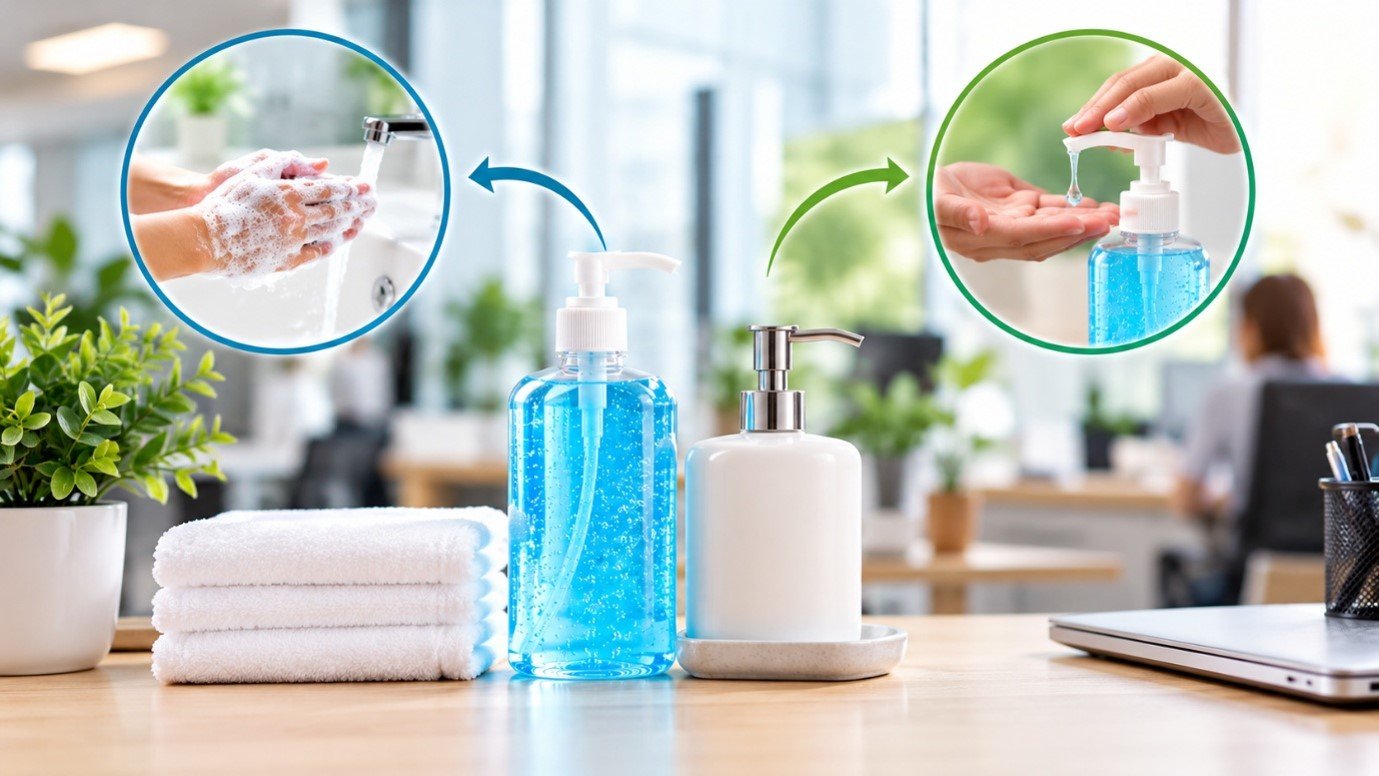
Public spaces do not have to choose between soap vs hand sanitizer. The most hygienic setups offer both, in the right places:
- Keep restrooms and kitchens stocked with soap and working sinks.
- Place a sanitizer stand at entrances, reception areas, and checkout lines.
- Add stations near shared screens, kiosks, and high-touch surfaces.
- Make dispensers visible, stable, and easy to refill.
- Check supplies regularly so stations are never empty.
When sanitizer sits where people already pause, using it becomes effortless. That is a simple way to support everyday hygiene without adding extra steps for customers or staff.
What Does a Simple Daily Hand Hygiene Routine Look Like?
A little awareness goes a long way. Good habits do not need to be complicated.
How Long Is Long Enough?
Wash with soap and water for about 20 seconds. With sanitizer, rub your hands together until they are completely dry, which usually takes around the same amount of time.
Where Does a Sanitizer Stand Make the Most Sense?
Put it where people naturally stop: building entrances, near doors, beside kiosks, and in front of checkout lines. Visibility matters as much as availability.
Will the Habit Actually Stick?
Make it easy. Keep a small bottle in a bag or pocket, and make sure shared spaces have a station that is stocked, stable, and easy to spot.
Conclusion
The honest answer is both, used at the right time. Choose soap and water when you can, especially when hands are dirty, after the restroom, and before eating. Choose hand sanitizer when a sink is not nearby or when you need a quick clean between tasks and shared surfaces.
Once you stop treating sanitizer vs soap as a rivalry, hygiene gets simpler. The HandStand Shop designs sanitizer stands built for busy, high-touch spaces, so clean hands are always within reach at the moments soap and water cannot be.
Frequently Asked Questions
1. Is hand sanitizer as effective as soap and water?
Sanitizers are effective in eliminating several types of microorganisms; however, soap and water are more effective in the removal of dirt, grease, and some microorganisms that are difficult to eliminate using sanitizers.
2. Can hand sanitizer replace hand washing completely?
Sanitizer is just a supplementary thing and cannot replace hand washing entirely. Hand washing is still very crucial, especially after using the restroom.
3. How much alcohol should hand sanitizer contain?
Choose an alcohol-based hand sanitizer that contains 60 percent alcohol or more, which is what is usually recommended.
4. How long should I wash my hands or use sanitizer?
Use soap and water and wash your hands for around 20 seconds. If you use hand sanitizer, continue rubbing until your hands are dry.
5. Should I use sanitizer after washing my hands?
Not required most of the time. When your hands are already clean after washing them, the additional use of hand sanitizer is unnecessary.
Want Clean Hands Within Easy Reach in Your Space?
Keep clean hands within reach at entrances, kiosks, and checkout lines. Browse sanitizer stands and dispensers built for busy, high-touch spaces and everyday routines.



Add a review
Your email address will not be published. Required fields are marked *