
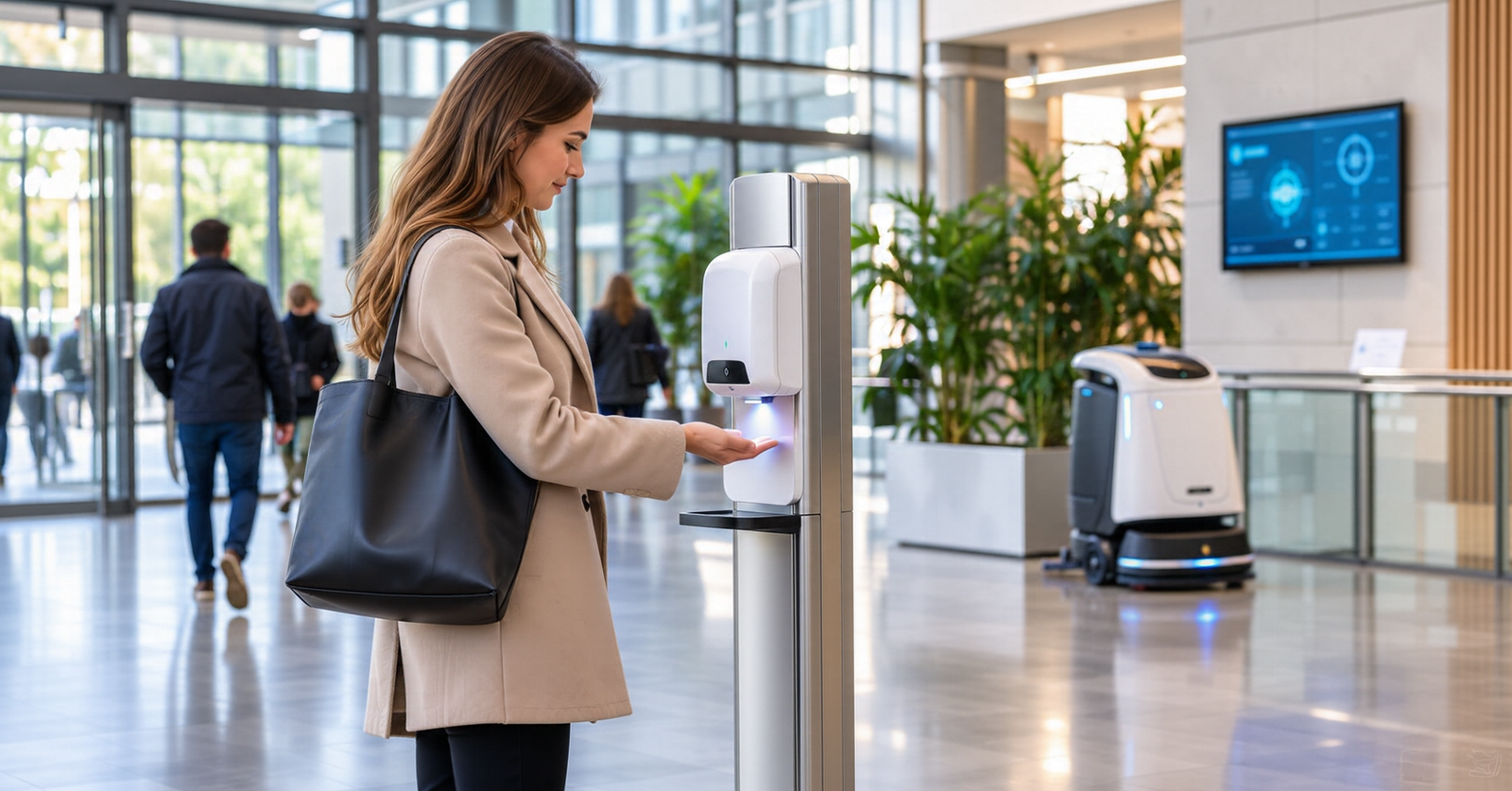
Welcome to Hygiene 2030: 10 Technologies That Could Change How We Keep Public Spaces Clean
Introduction
Hygiene used to mean a mop, a bucket, and a schedule. Today, public space hygiene technology helps buildings sense, measure, and respond. That shift is easy to spot in lobbies, offices, and shared areas. No crew can be everywhere at once, which is where tools step in. Some of these ideas are already in everyday use, while others are still taking shape, so it helps to know which is which before spending money.
Soap, sanitizer, and regular cleaning remain the base, and modern hygiene technology works best as a layer on top. In this guide, we walk through ten technologies, explain where each fits, point out their limits, and finish with a simple way to choose what suits your building.
Key Takeaways
- Technology supports cleaning and hand hygiene but does not replace them, so soap and routine cleaning stay essential.
- Touch-free access reduces shared touch points in busy areas, meaning fewer handles, buttons, and screens for everyone.
- Air, surface, and light-based tools each address a different route of spread, so match tools to risks.
- Sensors and data can show where and when cleaning is needed, so teams respond to real foot traffic.
- Begin with simple, proven tools, then add advanced ones where traffic justifies them, and review the results regularly.
Ten Technologies Shaping the Future of Hygiene Technology in Public Spaces
Not every idea below suits every building. Some are already established today, while others are still maturing. Read each one with your own space, traffic, and upkeep needs in mind.
1. Smart Hand Sanitizer Dispensers
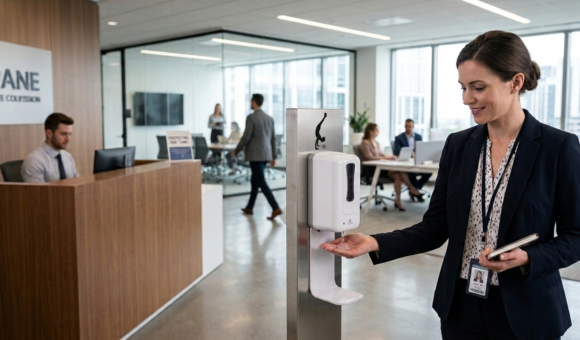
A dispenser no longer has to be a silent plastic box. Many connected models can report refill levels and usage counts, depending on the product. That helps staff restock before a unit runs dry and shows which entrances see the most use. It is a small upgrade that makes daily upkeep easier.
2. Touchless Taps and Sensors
Motion sensors in taps and soap dispensers cut contact at the sink, and this kind of touch-free hygiene technology is already common in restrooms. Basic infrared sensors can struggle with strong light or dark surfaces, so sensor quality matters as much as the idea.
3. Touchless Entry and Kiosks
Check-in kiosks, automatic doors, and phone-based access reduce the handles, buttons, and screens that many people touch. They matter most in lobbies and reception areas, where traffic is highest. Even one automatic door removes a handle that many people would otherwise touch.
4. UVC Disinfection
UVC light can inactivate viruses and kill organisms on surfaces, but it only works where the light reaches. Shadowed areas stay untreated. High output systems usually need an empty room, so they suit after-hours use.
5. Far UVC Light
Far UVC is marketed as a way to treat occupied spaces without exposing people. The field is still developing, so check current safety guidance and independent evidence before relying on it in a public building. Until the evidence is clear for your setting, treat it as one to watch rather than one to buy.
6. Air Filtration and Purification
Germs travel through the air as well as on surfaces. HEPA filters, higher air exchange rates, and UVC inside air handling units are becoming standard features in new builds and remodels of workplaces, schools, and public buildings.
7. Antimicrobial Surfaces
Coatings and materials are designed to limit microbial growth on door handles, counters, and rails. They have existed for over a decade, though cost has limited their use. Treat them as a helpful extra, not a reason to skip cleaning.
8. Robotic Cleaning
Robotic vacuums already handle routine floor care in many buildings, which can free staff for high-touch areas. Hospitals also use UVC robots that can treat an empty patient room in roughly thirty minutes. Used together, the two cover both daily upkeep and occasional deeper treatment.
9. AI-Powered Hygiene Monitoring
Sensors paired with artificial intelligence can flag spills, track foot traffic, and assess surfaces through imaging. Facility teams get a clearer picture of what needs attention. Privacy and accuracy still deserve a careful review.
10. Data-Driven Cleaning Schedules
Instead of cleaning by the clock, some teams clean by use. Traffic counts from entrance sensors or dispensers show where crews are needed most, which turns hygiene from a fixed chore into a response.
It also helps managers back budget requests with real numbers. Like other workplace hygiene innovations, it pays off only when staff can act on the data.
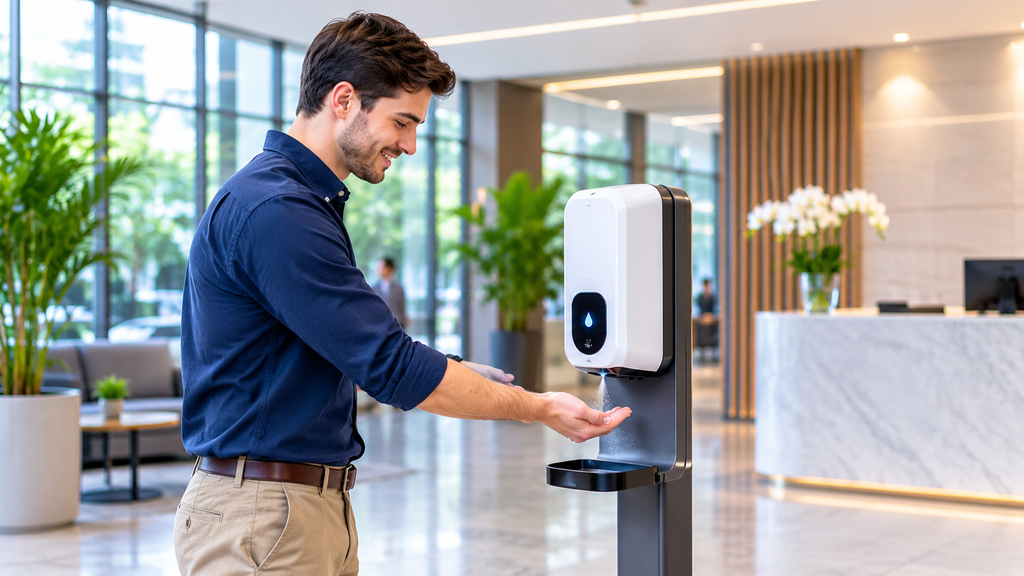
How to Choose Smart Hygiene Solutions for Commercial Buildings
The best public space hygiene technology is the kind your team can look after, and your visitors actually notice. Use this checklist before buying anything for your building:
- Start with the basics – Touch-free sanitizer and well-placed stations come first, and smart hygiene solutions can follow later.
- Match tools to risks – Choose air, surface, or hand tools based on how germs spread in your busiest shared spaces.
- Check upkeep needs – Sensors, batteries, and filters all need regular attention, so ask who will handle each task before buying.
- Ask for evidence – Request independent data for any performance claim, and be wary if a supplier cannot explain the testing.
- Train the team – A tool only helps when staff know how to use and maintain it, so plan training early.
Run through these five points with your facilities team before any purchase. A few honest answers now can prevent unused equipment later and keep spending focused on what matters most.
Conclusion
The tools above point to a future where buildings do more of the sensing and reminding. Technology can sense and report, yet people still decide what to do next. Still, the strongest results come from pairing new ideas with steady habits, clear signage, and a workable cleaning plan. Good public space hygiene technology earns its place by being visible, trusted, and easy to maintain, and the best place to begin is with choices that are practical today.
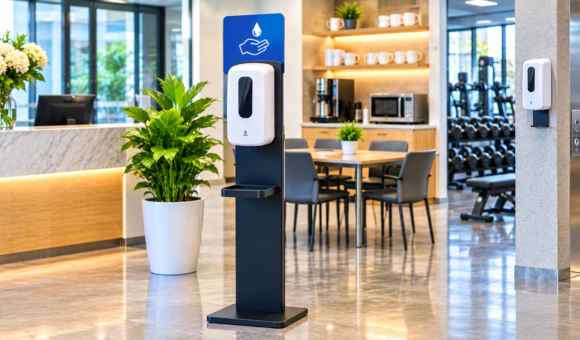
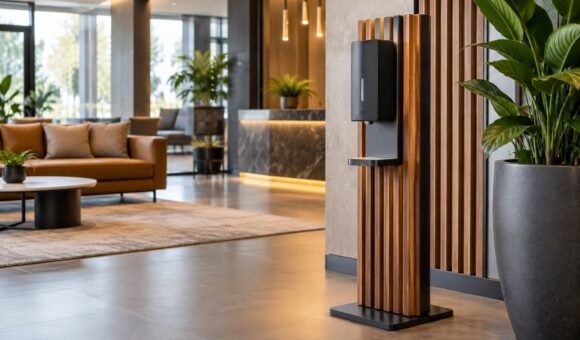
Floor-standing sanitizer towers and dispensers from The HandStand Shop include stands that work with touch-free dispensers. It is a simple first step toward a more hygienic building. Start with one entrance and expand as needs grow.
Frequently Asked Questions
What is smart hygiene technology?
It uses sensors, connected devices, and data to track and improve cleanliness. Examples include dispensers that report refill levels, touch-free fixtures, and systems that flag spills or heavy foot traffic.
Is UVC light safe for disinfecting public spaces?
UVC can inactivate germs on surfaces, but only where light reaches, and high-output systems usually require empty rooms. Follow manufacturer and safety guidance before using it anywhere people are present.
What is AI-powered hygiene monitoring?
It uses sensors and artificial intelligence to detect things like spills, foot traffic, or surface conditions, so cleaning teams can focus on areas that need attention instead of following a fixed schedule.
Are touch-free dispensers worth it for busy areas?
They reduce contact with shared pumps and buttons, which helps in busy spaces. Consider sensor reliability, refill needs, and power or battery upkeep before choosing a model for your building.
Can technology replace regular cleaning?
No. Technology supports cleaning and hand hygiene but does not replace them. Soap, sanitizer, and routine surface cleaning remain the foundation, with new tools added where they solve a specific problem.
Take the First Step Toward a Cleaner Building
Start with a touch-free sanitizer station at your busiest entrance, then build from there. Browse our range and find a stand that suits your space and traffic.
Add a review
Your email address will not be published. Required fields are marked *