

Choosing Sanitizer Stations for Offices, Schools, and High-Traffic Spaces
Hand hygiene has moved from an afterthought to a permanent fixture of how we design shared spaces. Offices, schools, clinics, gyms, restaurants, and event venues now treat accessible sanitization as a baseline expectation rather than a temporary precaution. But not all sanitizing setups are created equal. A bottle sitting in a corner is very different from a well-placed, freestanding station that people actually notice and use.
If you’re responsible for hygiene infrastructure in any shared space, understanding your options, and how to keep them running efficiently, can make a meaningful difference in both compliance and cost.
Why Freestanding Units Outperform Wall Mounts
The most common mistake organizations make is treating sanitization as a wall-mounted problem. Wall units have their place, but they come with a significant limitation: they’re fixed. They can only go where there’s an appropriate wall, and that’s rarely where foot traffic actually flows.
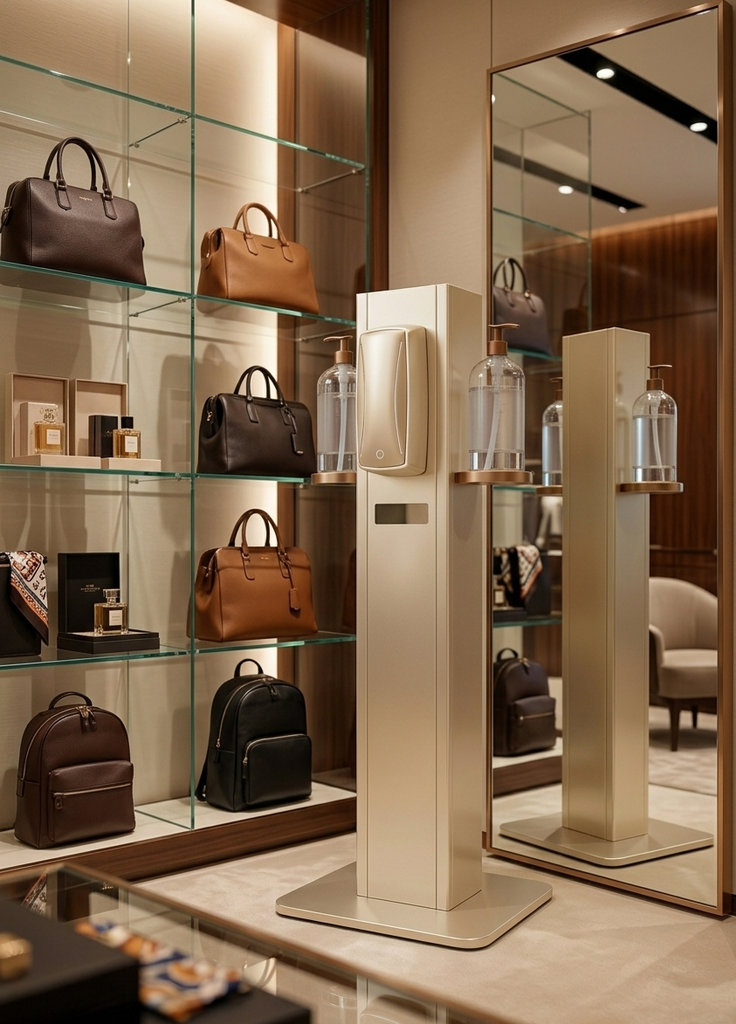
A hand sanitizer dispenser with stand solves this problem entirely. Because it’s freestanding, you can position it exactly where people naturally pause, entrance thresholds, reception desks, lift lobbies, cafeteria queues, meeting room doors, or beside sign-in stations. Visibility drives usage, and a well-placed freestanding unit in a walkway will be used far more often than a dispenser tucked beside a doorframe.
Freestanding units also offer flexibility as your space changes. Reconfiguring an office layout, hosting an event, or setting up a temporary registration area? A stand moves with you. A wall mount doesn’t.
Additional practical advantages include:
- No installation damage — no drilling, no wall repairs when you relocate
- Adjustable placement during peak periods like flu season or exam weeks
- Professional appearance — a clean, purpose-built stand signals that hygiene is taken seriously
- Stability — quality units have weighted bases that resist tipping in busy areas
Selecting the Right Unit for Workplace Environments
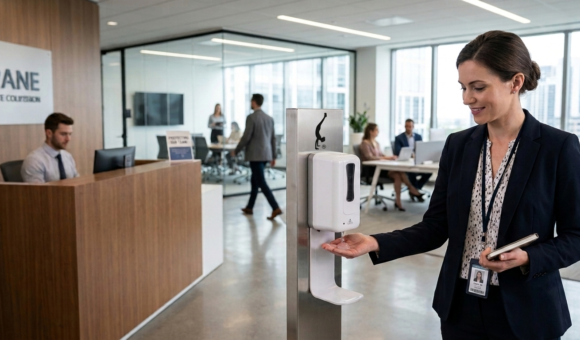
Choosing the best hand sanitizer stand for office environments involves balancing aesthetics, durability, and practicality. Offices are professional spaces where visual consistency matters, so the unit should complement the interior rather than look like temporary equipment.
Key considerations for office settings:
Dispensing mechanism. Touchless automatic dispensers are ideal for high-traffic corporate environments, as they reduce contact points and feel more modern. Manual pump or foot-pedal models cost less and require no batteries, making them practical for smaller offices or budget-conscious setups.
Capacity and refill frequency. A busy office reception can empty a small reservoir surprisingly fast. Larger-capacity units reduce how often your facilities team needs to intervene, which matters more than it sounds when you’re managing multiple floors.
Build quality. Stainless steel and powder-coated metal stands last considerably longer than lightweight plastic, particularly in environments where units get bumped by bags, trolleys, or cleaning equipment.
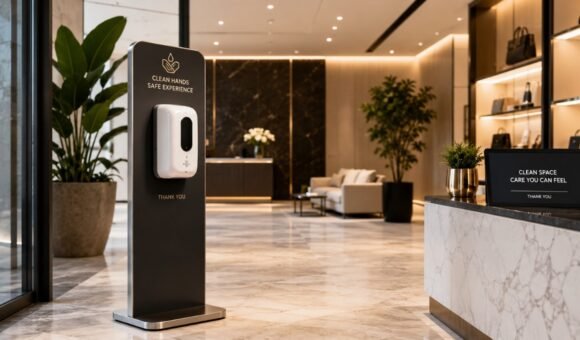
Signage integration. Many office-grade stands include a panel or frame for branding, hygiene reminders, or wayfinding information, turning a functional unit into a communication tool.
Special Considerations for Educational Settings
Schools present a distinct set of challenges. A hand sanitizer stand for schools needs to account for factors that simply don’t apply in corporate environments.
Height accessibility. Primary school children can’t reach a standard adult-height dispenser comfortably. Adjustable-height units, or dedicated lower-profile models for younger year groups, significantly improve actual usage rates among students.
Durability under heavy use. School corridors during a change of period are genuinely high-impact environments. Units need weighted, stable bases and robust construction to survive daily contact with rushing students, backpacks, and general wear.
Volume of use. A single school can have hundreds or thousands of students passing through key points multiple times daily. This dramatically affects refill planning and makes capacity a primary consideration rather than a secondary one.
Safety. Units should have no sharp edges, no easily detachable small parts, and stable construction that won’t tip if leaned on. Some schools also prefer lockable reservoirs to prevent tampering or misuse.
Strategic placement. Canteen entrances, main corridors, gymnasium doors, and classroom thresholds tend to deliver the highest usage. Placing units where students already queue naturally increases compliance without requiring enforcement.
Managing Supply Efficiently
Owning quality dispensers means little if they sit empty. This is where many organizations discover their real ongoing challenge isn’t the hardware, it’s the consumables.
Purchasing bulk hand sanitizer refills rather than individual retail bottles is the single most effective way to control ongoing costs while ensuring continuous availability. The per-litre cost difference between bulk containers and small retail bottles is substantial, and that gap compounds significantly across a full year of operation in a multi-location facility.
Bulk purchasing also delivers benefits beyond price:
- Reduced packaging waste — fewer plastic containers entering the waste stream
- Fewer procurement cycles — less administrative time spent reordering
- Formula consistency — the same product across all locations, which matters for staff and students with sensitivities
- Supply security — buffer stock protects against shortages during demand spikes
When sourcing bulk supply, verify the alcohol concentration meets health authority recommendations (generally at least 60% alcohol content for effective sanitization), and check expiry dating to ensure your order volume matches realistic consumption within the product’s shelf life.
Building a Setup That Actually Gets Used
The most effective hygiene infrastructure is the kind people barely think about, it’s simply there, visible, full, and easy to use. That outcome comes from three things working together: the right unit for the environment, thoughtful placement along natural traffic flow, and a reliable refill system that prevents empty dispensers.
Whether you’re equipping a single office floor, an entire school campus, or a multi-site organization, investing in quality freestanding units and a sensible bulk supply arrangement delivers better long-term value than piecing together ad-hoc solutions as needs arise.
Frequently Asked Questions
How many sanitizer stations does an average office need?
A general guideline is one unit per main entrance, one per floor lobby, and additional units near shared facilities like kitchens, meeting rooms, and print stations. For a standard office floor of 50 to 100 people, three to five units typically provides adequate coverage without overinvesting.
Are touchless dispensers worth the extra cost over manual ones?
In high-traffic environments, generally yes — they reduce contact points and tend to see higher voluntary usage. For lower-traffic spaces or tight budgets, quality manual or foot-pedal units perform perfectly well and avoid battery maintenance entirely.
What alcohol percentage should I look for in bulk refills?
Most health authorities recommend a minimum of 60% alcohol content for effective hand sanitization. Products in the 60 to 80% range are generally considered the effective window.
How often will stations need refilling?
This depends entirely on traffic and reservoir capacity. A busy school corridor unit may need daily attention, while a small office unit might last one to two weeks. Track consumption for the first month after installation to establish a realistic schedule.
Can sanitizer stands be used outdoors?
Some models are suitable for covered outdoor areas, but direct sun exposure degrades sanitizer formulations and extreme temperatures can affect dispensing mechanisms. For outdoor events, check that the specific unit is rated for it and position it under shelter where possible.
Do bulk refills expire?
Yes. Alcohol-based sanitizers typically carry a shelf life of two to three years, but alcohol evaporates over time once containers are opened. Order bulk quantities you’ll realistically use within a reasonable window rather than maximum volume for maximum discount.
What’s the best height for a school sanitizer stand?
For secondary schools, standard adult height (around 1.2 to 1.4 metres to the dispensing point) works well. For primary schools, lower units or adjustable-height models are strongly recommended so younger children can use them independently without assistance.
Is a freestanding stand worth it if we already have wall dispensers?
Often yes, as a complement rather than a replacement. Wall units cover fixed points like washrooms, while freestanding stands let you cover entrances, queues, and event areas where usage is highest and where no suitable wall exists.
Add a review
Your email address will not be published. Required fields are marked *